
Emily McIntire—a New York Times bestselling author, whose novels have sold more than 2 million copies and have been translated into more than a dozen languages—is beloved for her books’ famous devotion to capturing “seriously questionable morals”. Emily writes multiple books a year, driven by a creative force that she calls her muses. She has an instinctual creative process that, for her, feels almost mystical; her characters feel like they literally speak through her. It was a gift, until her imagination went totally silent when she was diagnosed with Stage IV breast cancer in 2024. The characters who would once “drop in” like house guests disappeared entirely.
Before she was diagnosed, in her 2023 book, Twisted, she wrote about a character’s father who had terminal cancer: “That’s what cancer does. It ravages you from the inside out, without caring who you are.” The next year, Emily says, that was her experience.
In her conversation with Jadey, Emily talks about losing her sense of self, meeting a new one, creativity, motherhood, and partnership.
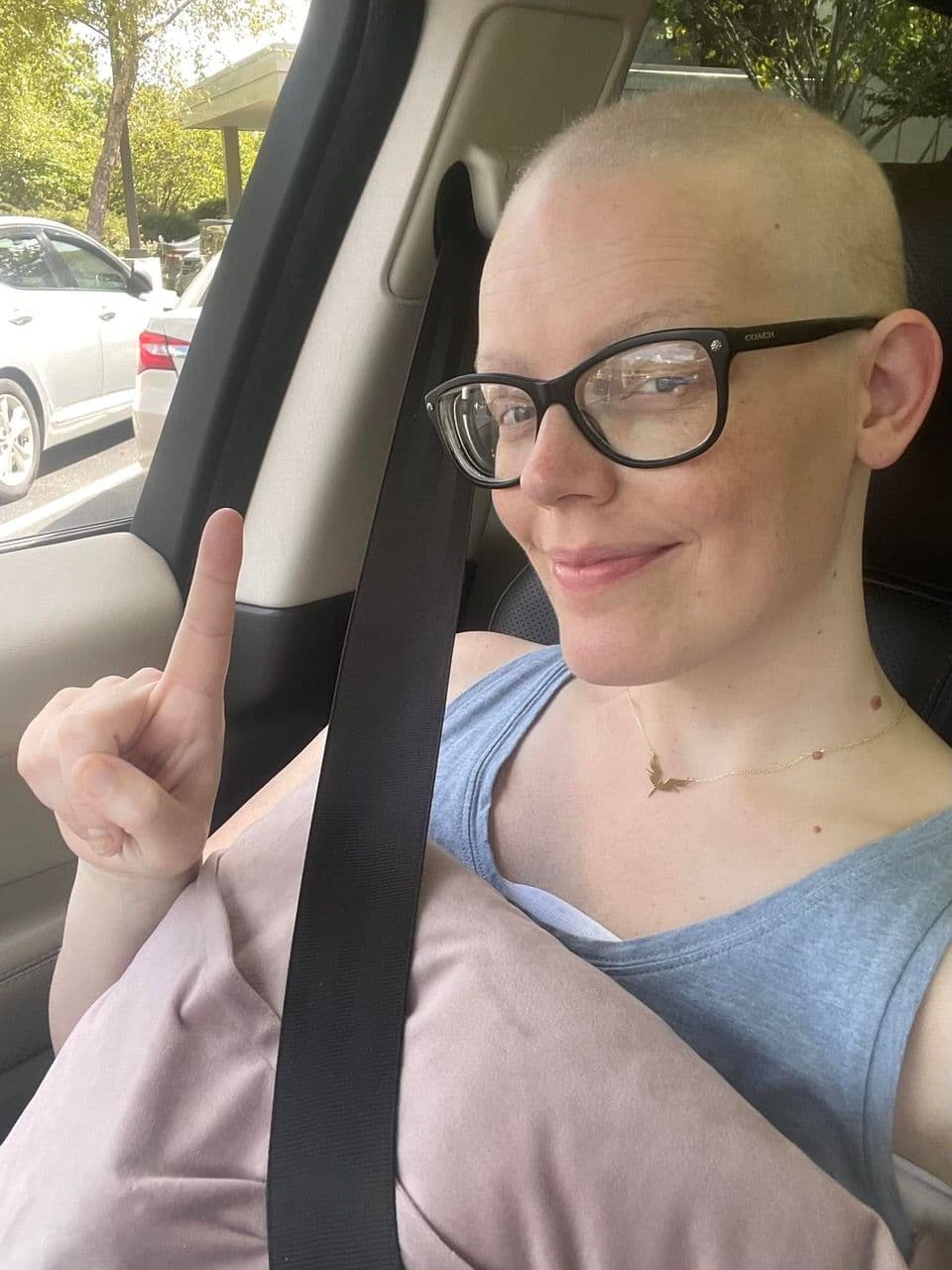
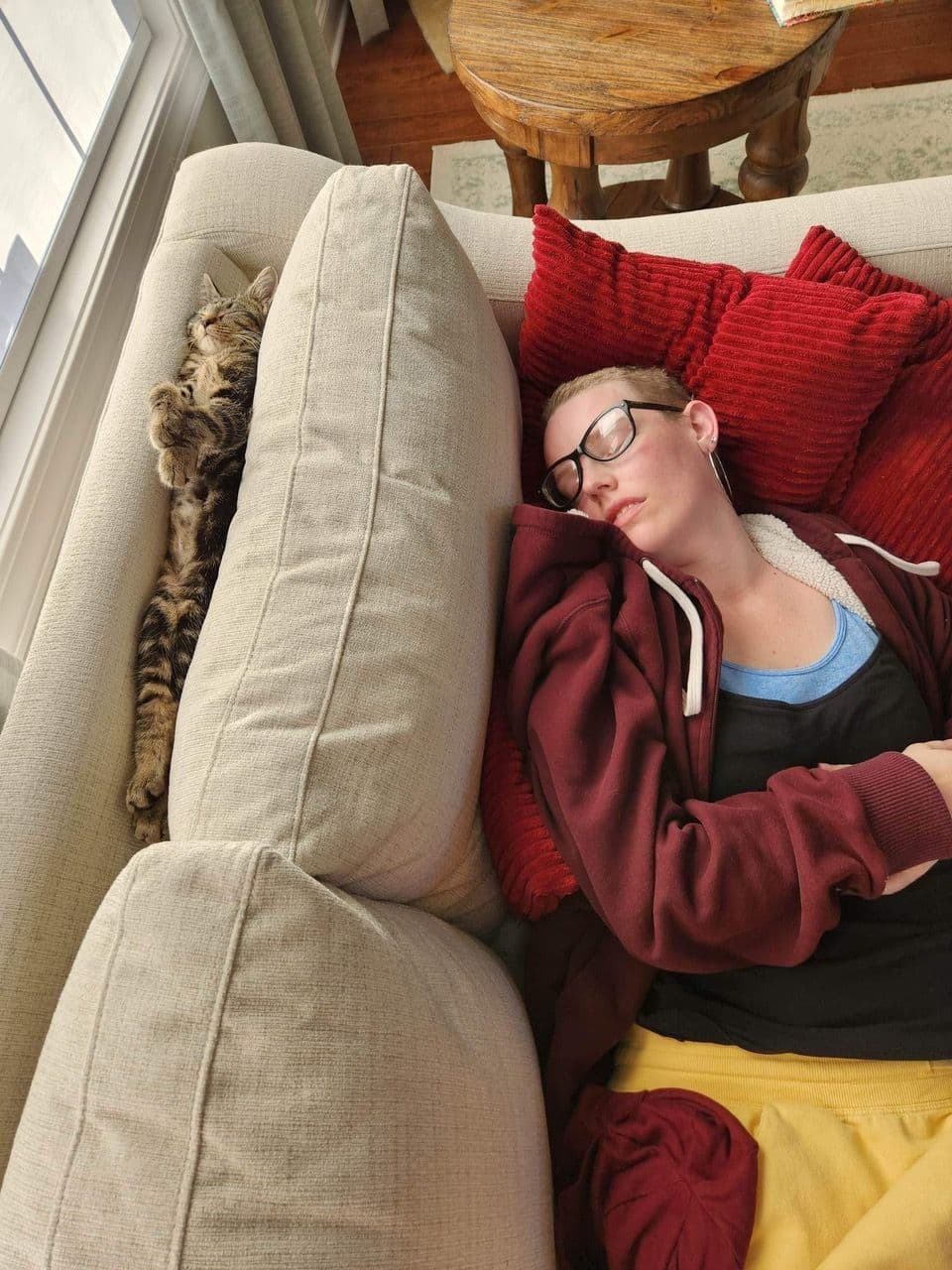
Emily McIntire resting with her cat during breast cancer treatment.
Q:
Can you walk me through how you were first diagnosed?
A:
I had just turned 30, and I had a brand-new baby and. I noticed a small lump in my breast while I was breastfeeding and thought it was mastitis. I went to my OB-GYN, and they told me it was just a clogged milk duct and that I was too young for cancer, it didn’t run in my family. So I trusted them and put it aside.
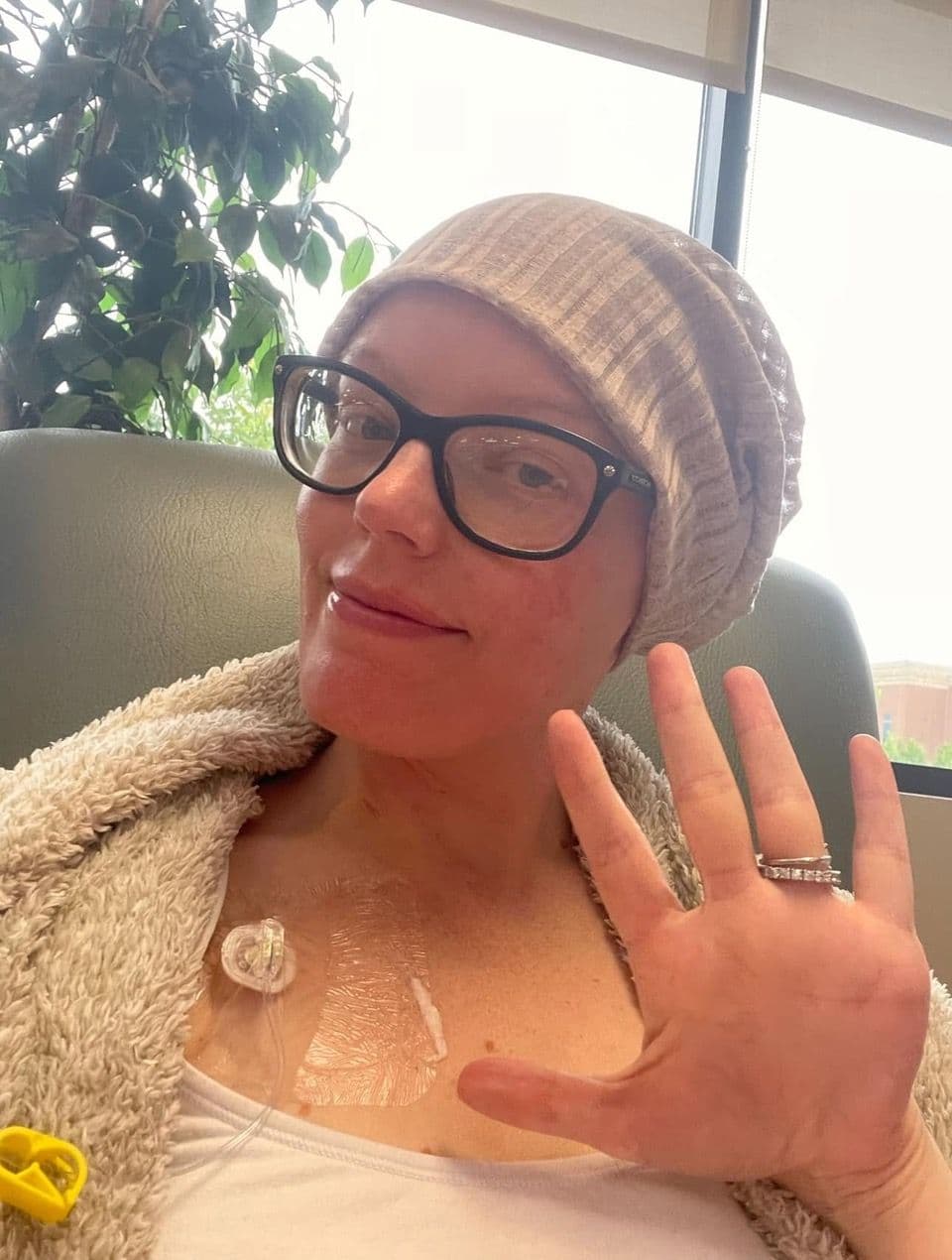
When I stopped nursing about a year later, I lost weight and noticed the lump was still there. I went back, and again they said it was just a cyst. They wouldn’t order a mammogram. I moved states another year later, got really healthy, lost more weight, and then I could see it clearly: it had grown a lot, it was very painful, my breast was hard as a rock. I finally went to a new doctor. Within 24 hours, I had a mammogram, ultrasound, and a diagnosis: Stage III breast cancer in my lymph nodes. It had been spreading for years. There were two tumors spanning 9.5 centimeters across my breast. Triple positive.
When I found out, I was with my husband. It was very traumatic. I was sitting in the waiting room in the front and sobbing for like an hour; my husband went and took a couple shots at the bar. And then we had to put on a happy face, because our daughter was in the hotel room. My daughter was three; she didn’t understand what was happening.
I had a double mastectomy. They got clear margins, but the biopsy showed the cancer had come back. I was sent to a specialist in Nashville and put on newer chemo. After a couple cycles, I had no evidence of disease. I did 36 rounds of radiation. By round 23, I was severely burned, got an infection, went septic, and was hospitalized. I now have permanent lung scarring. We paused chemo, finished radiation, and I remain having no evidence of disease.
I asked my oncologist if I could stay off [the chemo] since it was so new and I wanted quality of life. He agreed. I’ve now been off for a year and [there has] been no evidence of disease for a year. It’s been very traumatic, but we’re on the upswing now.
Q:
It sounds like the mental and emotional side of cancer was more challenging for you, than the physical aspects?
A:
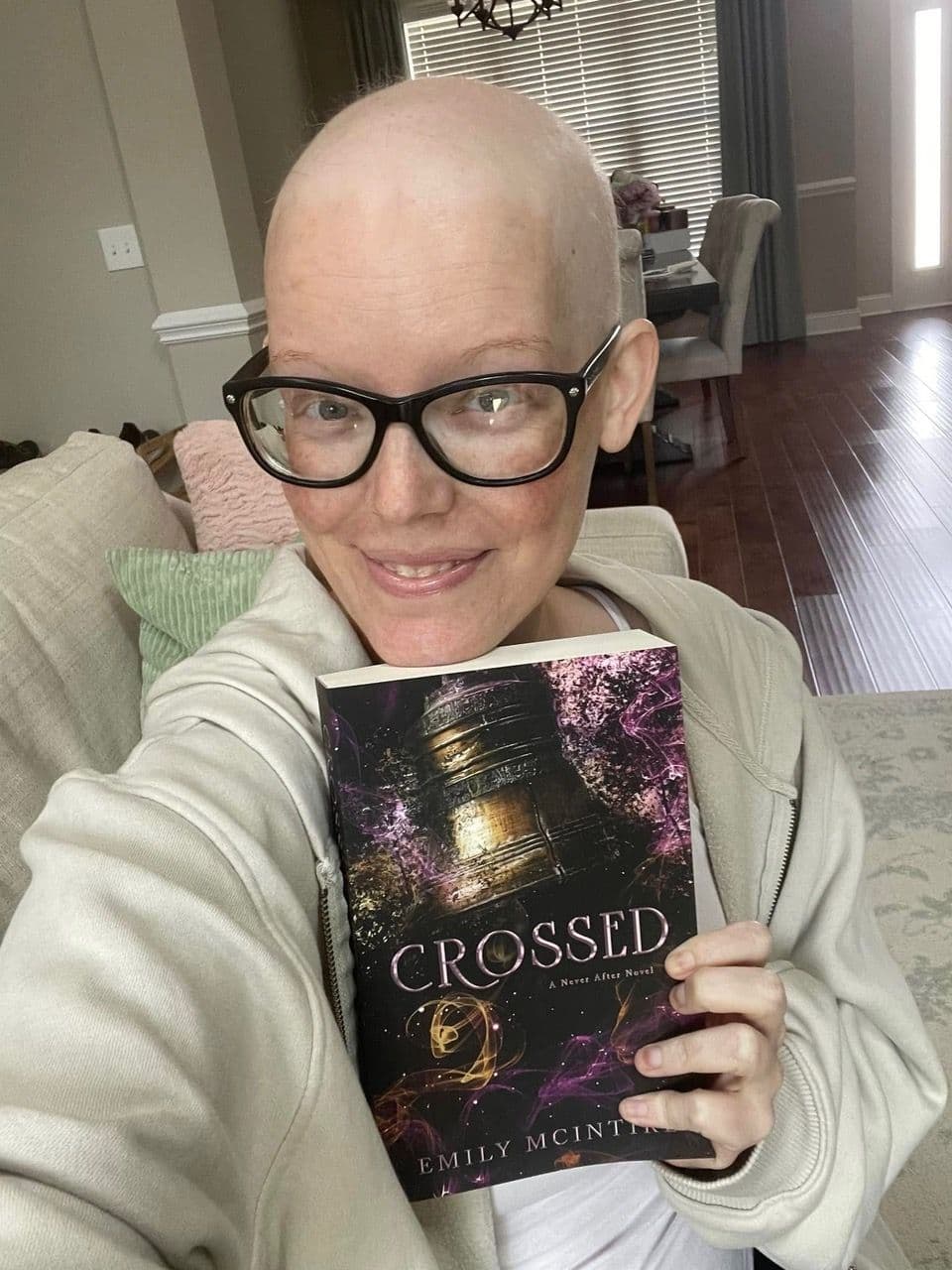
They prepare you for the physical side effects. They don’t prepare you for the mental aspect and how changed you become. It’s such a dark place. Even the people supporting you don’t truly understand what it’s like to be going through it. And then when you’re healthy again, everyone expects you to go back to who you were before, but you’re still dealing with severe trauma and aftereffects and a fundamental changing of who you are.
Q:
What did you first notice the way your cancer diagnosis and treatment changed you?
A:
I compartmentalize. When I found out, it was: Okay, we’re going through these steps. I don’t like to show emotion. But my books [and writing career] support my family. My husband had quit his engineering job to work for me and stay home with our daughter.
I thought I’d just push through treatment and keep writing. I was kind of delusional when I first started. I thought: I'm going to be able to push through because that's who I am as a person. But I lost my muses.
I was so ill from chemo, physically and mentally. I couldn’t even watch TV. I lost the ability to do anything. I lost my purpose other than being a mom, but I couldn’t be fully present there either.
[After treatment], after losing my muses and then having them come back and being able to have them again: it’s really made me center myself with the joy of writing again. When I started working again, I had a much better work-life balance. I don’t let myself have stressful deadlines anymore. I make sure I’m with my daughter every day. I realized my books sold even when I wasn’t there [actively promoting them all the time and writing new ones]. My readers supported my family through years when I couldn’t write.
It also changed how I view medicine for mental health. My anxiety was so severe. My doctor prescribed Xanax, and I truly believe it saved my life through chemo. It changed how I allow myself to lean on support.
And I would say it helped my vanity a lot. I'm a double Leo and a Capricorn moon, so I'm very much like: I need to be the best. I need to be number one, and I need you to think that I look good while I do it. I really had to look at myself through losing my hair.
But now I’m in medical menopause and I can’t show up in the same way. But being authentic and being alive, seeing signs of aging and not looking perfect, and being here: that means more to me now than it ever would have been to the person before. I would have just taken it for granted. I'm sure it comes across in my writing and in everything I do now.
Q:
When your creativity came back, did it have a different sound or form? Did the muses feel different?
A:
They were untouched. They were exactly the same. My process has always been instinctual: the characters drop in my head and I transcribe. They went away during chemo and I was scared they’d never come back. I felt very lost, my purpose felt very lost because of that. When they did [return], it was the same as it had always been.
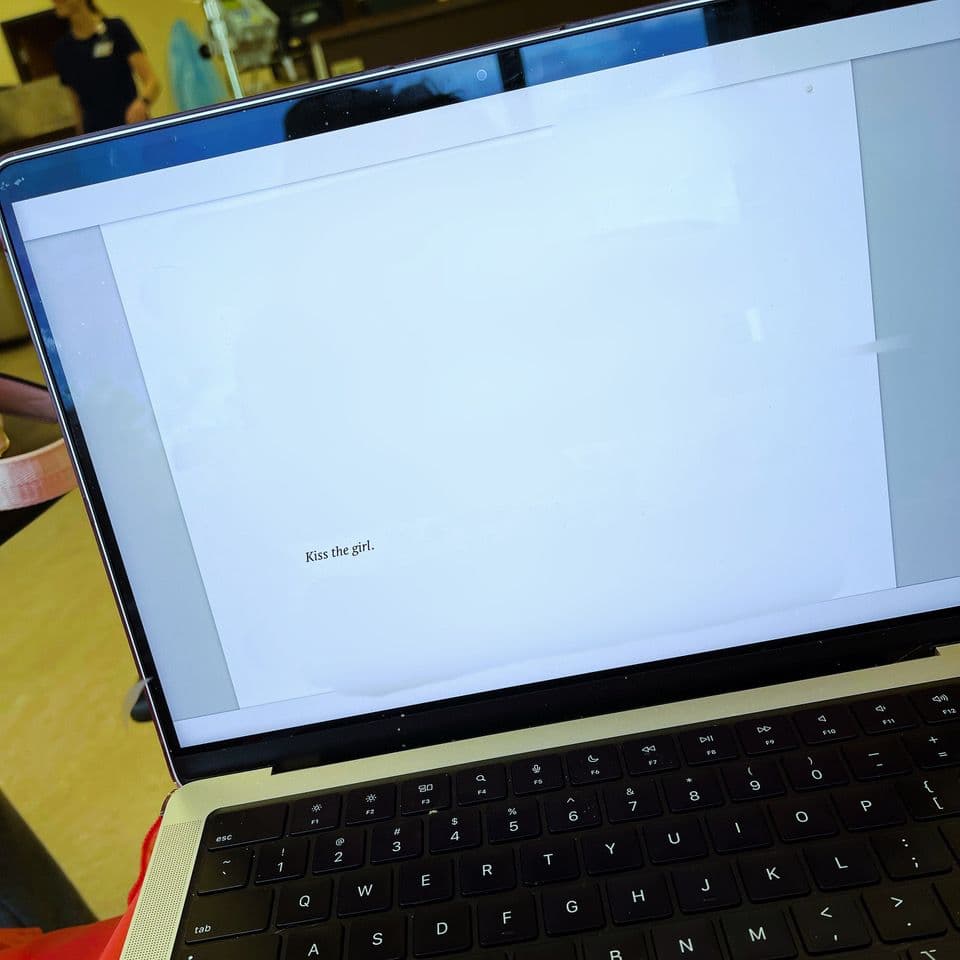
Emily McIntire writing 'Hexed' from her chemo chair during breast cancer treatment.
Q:
Of course, your creative and professional life is a huge part of who you are. And you’re also a person outside of writing. Were there other ways you felt a change?
A:
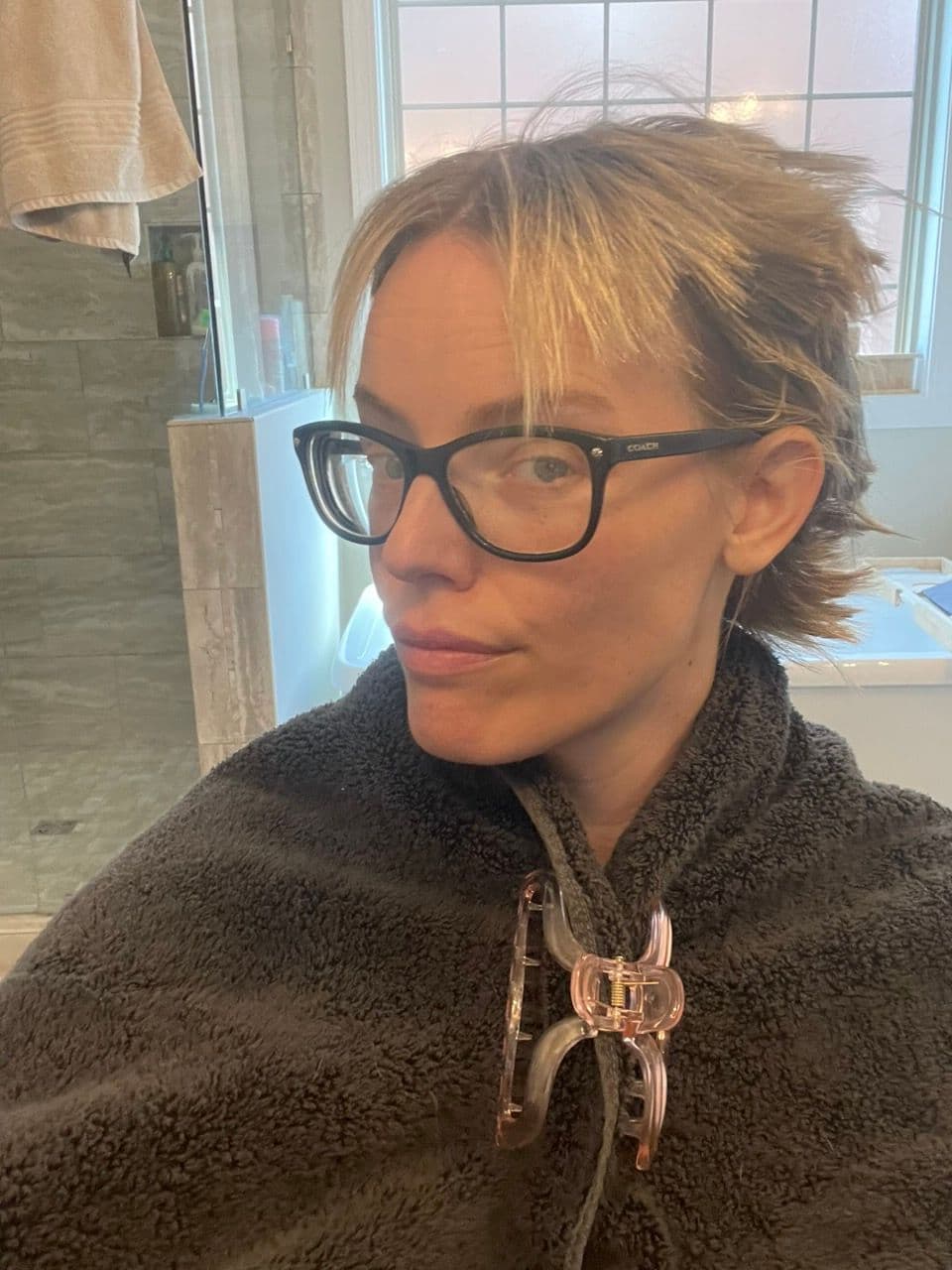
Absolutely. The hardest part was with my daughter. I’m a very present mom, and I couldn’t play with her. She was confused. I’d leave for an hour and end up in the hospital for a week. She has trauma from that and anxiety when I leave [the house], [she has a] fear of losing her hair because I lost mine.
I've always been a deep person, but I've always been vain. I've always really prided myself in my looks and how I appeared to other people. I lost that through cancer. You can't have that really. Cancer strips you down to the base level. You rebuild as a new version of yourself. In pretty much every aspect of my life, it changed me.
Q:
Oh, that sounds so tricky and hard. How are you approaching things with your daughter, who was four at the time of your diagnosis, now?
A:
We’re very open. She takes things literally because she’s autistic. She knows Mommy was sick. During [treatment] I had severe nosebleeds: gushing blood and ER visits. She saw that. It was traumatic. She still says, ‘No more radiation, no more chemo, no more cancer.’ She worries if I don’t take my pills I’ll get sick again.
We take it day by day. I’m not sure she fully understands what cancer is. She just knows Mommy was sick, and now she’s not.
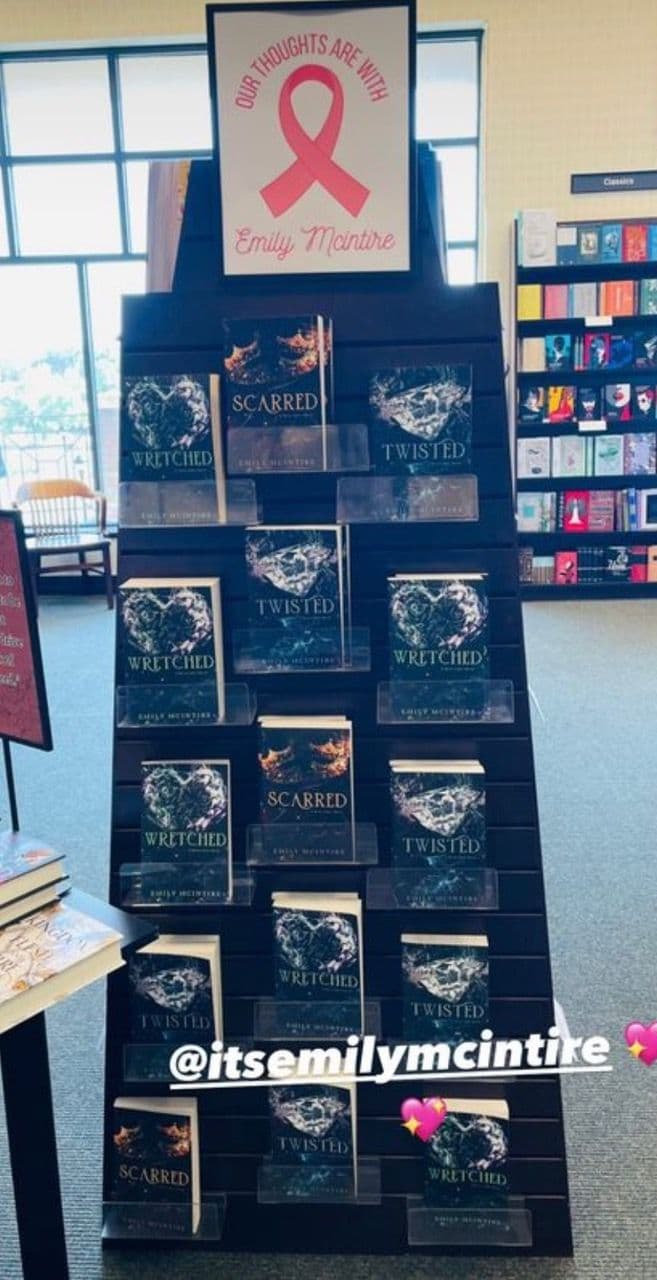
Emily McIntire's books displayed with a supportive message from the store.
Q:
So you wrote about cancer before you had it, which is uncanny. In your book, Twisted, a character’s father has terminal cancer. What was it like reading your own writing about cancer after your diagnosis? Did you get it right?
A:
I did get it right in my mind. I had written about cancer before from the perspective of someone watching a loved one go through it. That is one of the most popular highlighted quotes in that book; 3,200 people have highlighted that.
Reading it now, it hits harder. It feels like giving yourself advice. I don't normally read my books after I write them, but I saw the line, and it just kind of takes you back. I read lines and think: Wow, I really got that right. Now it makes me cry.
Q:
Has cancer influenced the kinds of stories you want to tell?
A:
Not consciously. I follow my gut—or, you know, my muses. But I’ve always wanted readers to experience situations they’ve never been in, like panic attacks and trauma, and [see characters] fall in love not in spite of [these experiences], but through them. If anything, that’s gotten stronger.
That's always been kind of my calling with writing. I want people to fall in love a thousand different ways, a hundred different timelines with a thousand different experiences. Because everybody should get to feel that feeling, that giddy butterfly feeling, no matter what. So I feel like, if anything, maybe that's gotten stronger, you know, because I feel like people should experience things even harder.
Q:
Why was it important for you to be public about your diagnosis?
A:
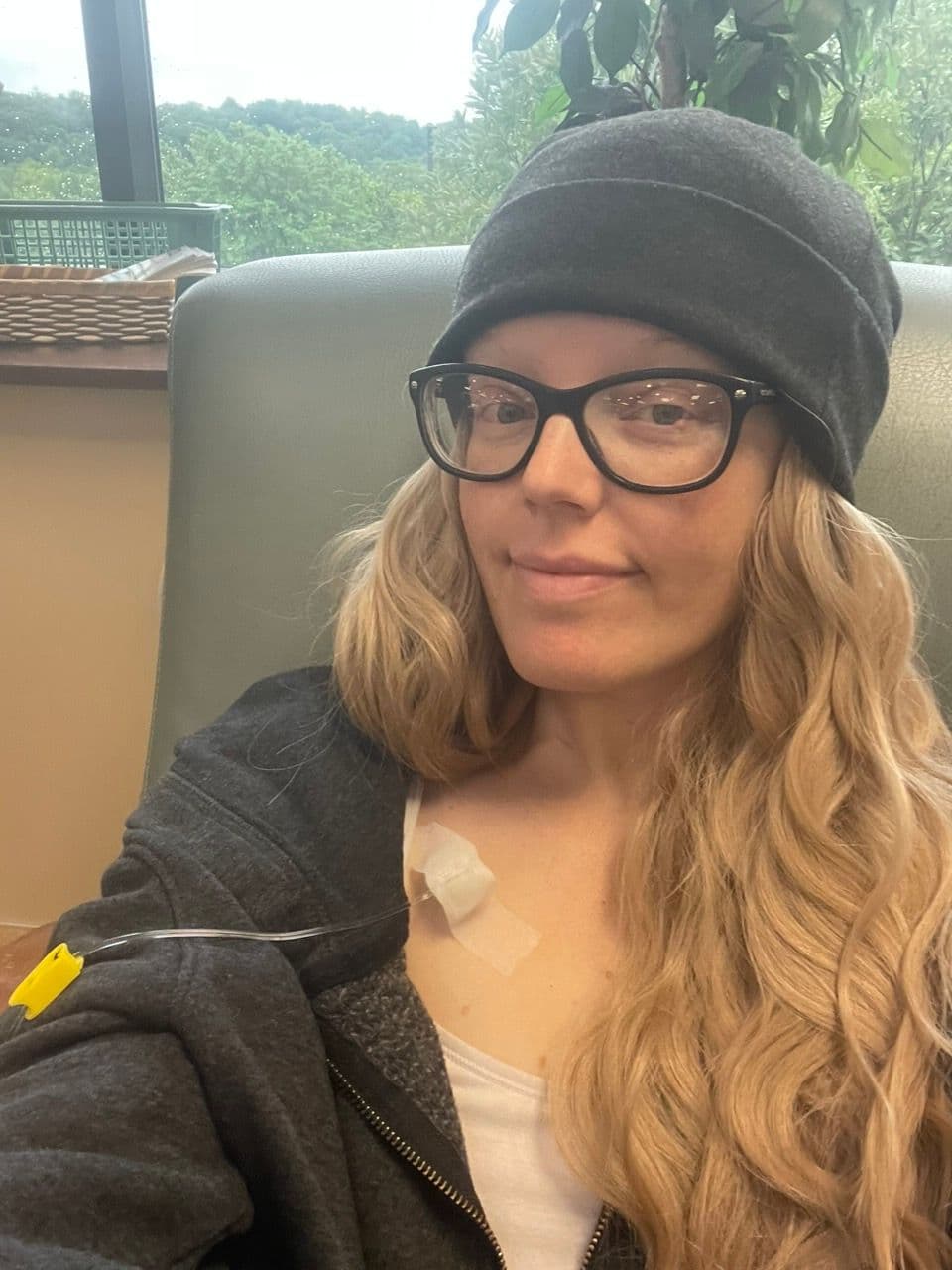
I cannot tell you the amount of messages I have received, of people who went and got checked because of my story, and some of them did have breast cancer.
Now, I have to keep tissues on my table at every event. When I went on tour after my last release, people came up sobbing with their own stories. The cancer community is the shittiest group to have to be part of, but it’s one of the strongest. Being part of that is an honor.
Q:
Were there any downsides to being public?
A:
I do have a very public platform with hundreds of thousands of followers, and I did post very publicly about my cancer, and there are a lot of people who react when you're talking about your treatment process. They tell you everything that they know about people who have died from the same thing, in the comments or in person. That's not very helpful. It's very traumatic. Or a lot of people will say: “Well, have you tried castor oil? Have you rubbed castor oil on it?” “You shouldn't do chemo. That just kills you.” That makes it worse.
The other thing I'll say is people sometimes have a tendency to treat you like you can't do anything. Sometimes all you want when you're so sick is to not focus on the cancer. Even when you're on the upswing after treatment, and people treat you like you’re perpetually sick. That's not really helpful. Why wouldn't you just treat me normally? Just ask me. You don't have to treat me like I'm literally dying. Because when you're losing the core pieces of you and you're navigating this thing, sometimes you just want some normalcy.
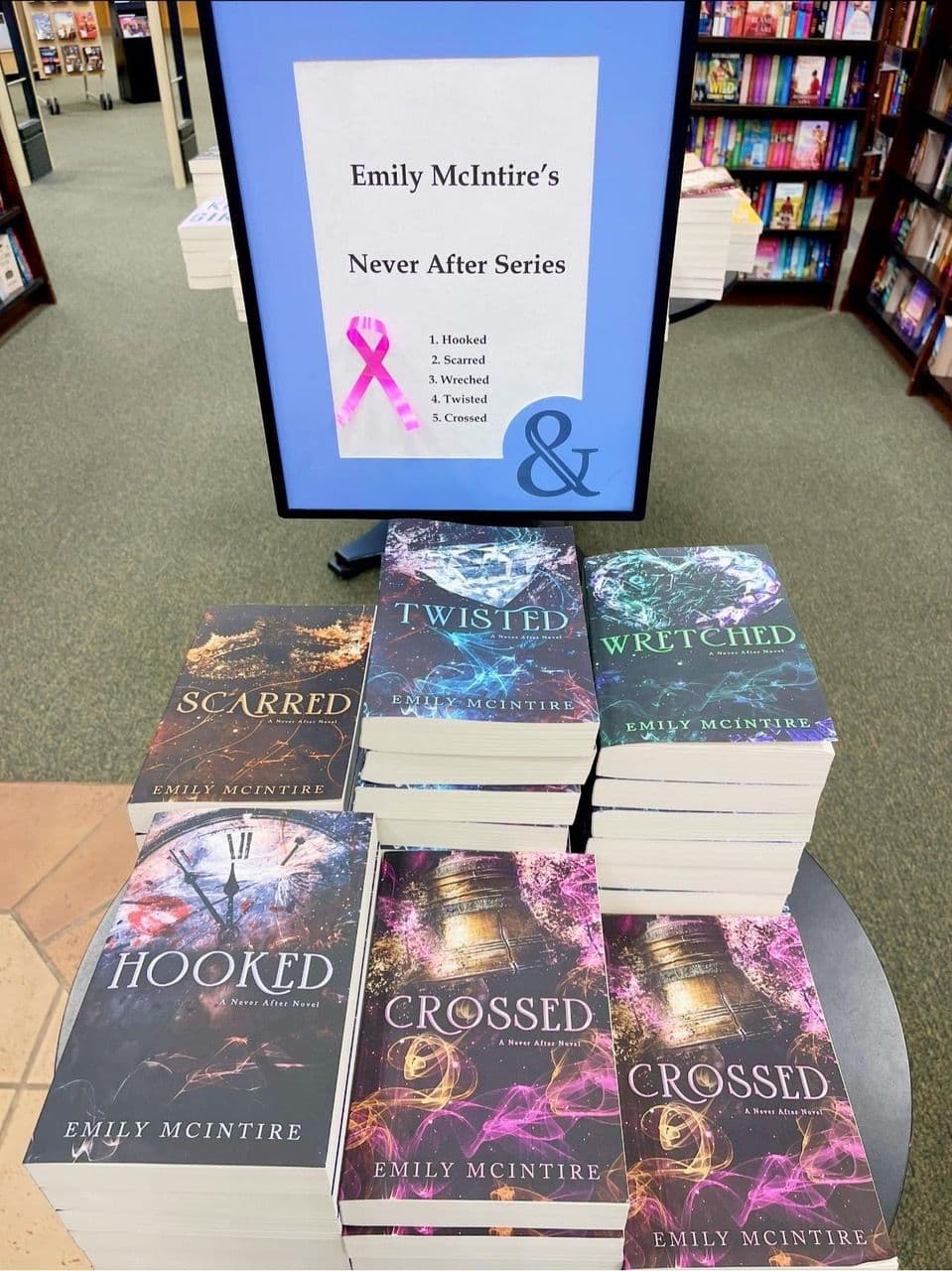
Emily McIntire's books displayed with a supportive message from the store.
Q:
What did people do that was helpful?
A:
I feel like this is the perfect question. I feel like I could talk about this for hours. So I'll start with my husband, because he was my rock through all this. Caretakers get overlooked. People focus on the patient and forget the weight on the partner. I wish we’d prepped better for his support. You're busy fighting for your life, but you're watching them deteriorate and fall into depression and have the weight of the world. They're just expected to be fine, and don't get a lot of help. He struggled a lot, and he didn't really have a support system or someone he felt like he could talk to.
My best friend who lives in the state over was [with me] so much. She showed up every time. She was there for my dark humor, which is what I needed. I needed the sarcasm. She would drive to take me to chemo treatments or doctor's appointments if we couldn't get a sitter for my daughter and my husband needed to stay.
Q:
What would you say to someone newly diagnosed, who feels like they’re losing who they are?
A:
First of all: you don't know how strong you are until you have to be. No matter what happens, you are strong enough. You are strong enough to get through it. There will be dark moments and light moments. It’s okay to be in the dark moments. There’s no shame in needing help: from doctors, therapists, anyone. This is your time to be selfish and care for yourself. There is no shame in telling everybody that you need time or you need to do this.
But it sucks, and sometimes you just need someone to tell you that it sucks and not to be like ‘you got this.’ Being called a ‘warrior’: it's the most triggering thing. It’s either this or what’s the alternative? I’m not stronger than anybody else. We just get through what we have to get through. Just saying, ‘I'm sorry you have to go through it. It is not fun. It's awful. But you are strong enough, and you will get through it.’
You might lose who you thought you were, but you gain a true understanding of who you are at your core.
* All photos courtesy of Emily McIntire.