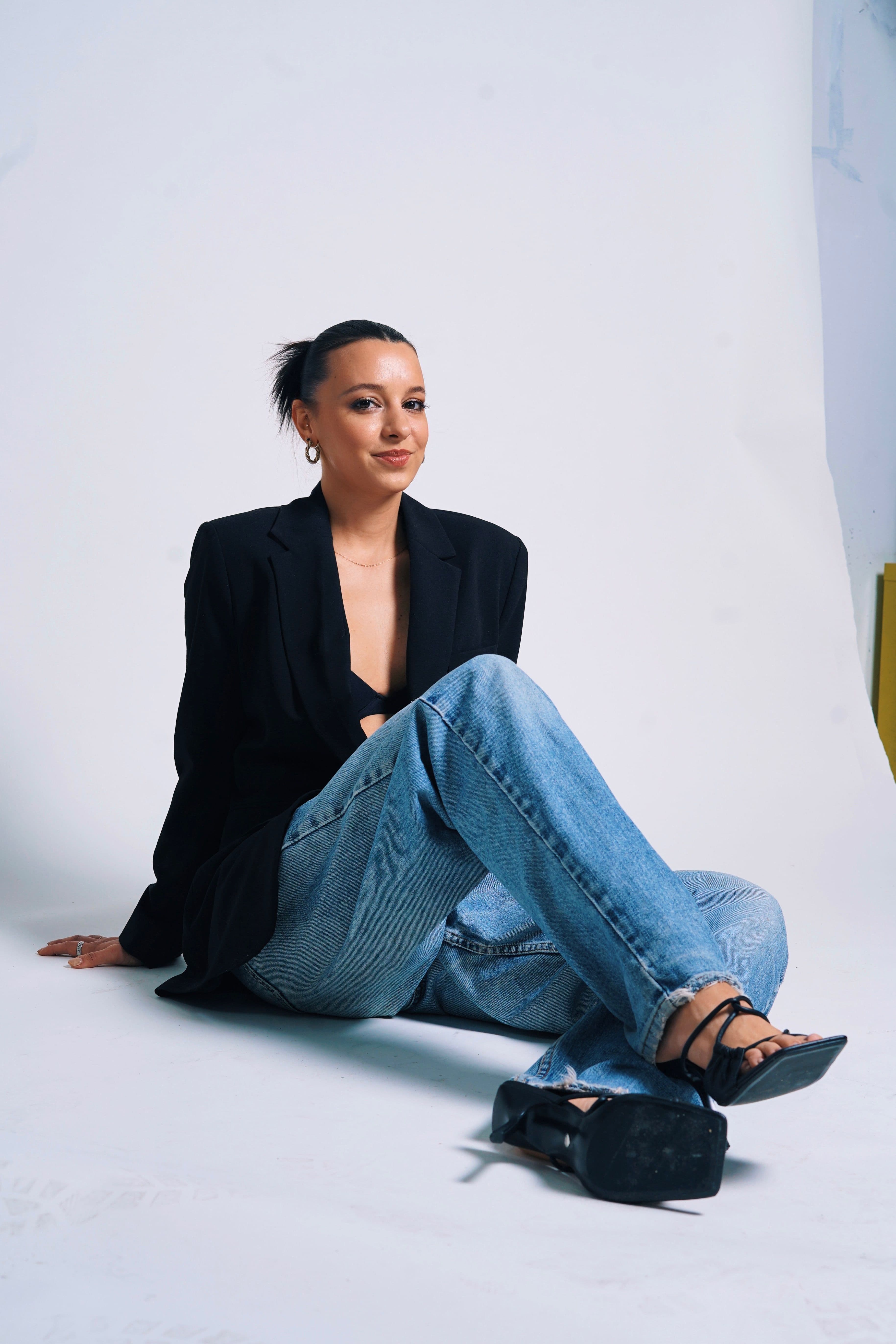
Netty Jordan
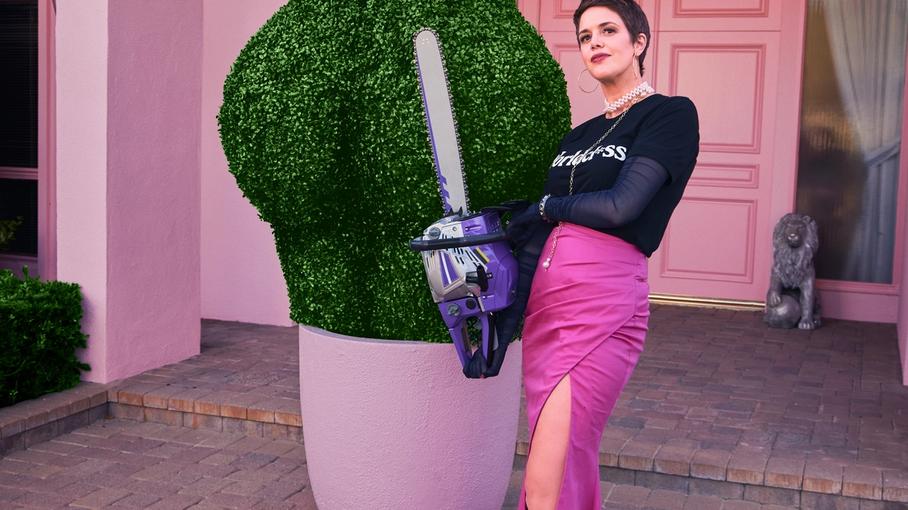
Netty Jordan is a celebrity hair stylist with fifteen years of experience.
Netty Jordan is an exceptionally talented hair stylist whose work with celebrities is often featured on the red carpet and magazine covers. Netty Jordan is also an exceptionally good friend. When her friend Jennifer Shorr, who owns Joyface and HiLot bars in New York’s East Village, was diagnosed with breast cancer and had to pursue chemotherapy, Netty started coming over once a week to care for Jennifer’s hair. Jennifer was cold capping and Netty developed a rigorous-yet-gentle routine to help Jennifer keep as much hair as possible.
In her as-told-to with Jadey below, Netty shares some advice about how to prepare hair before chemotherapy, how to treat it during chemotherapy and cold capping, and how to stimulate regrowth afterwards. (Just a note: not everyone who goes through chemotherapy will lose their hair and not everyone will be a candidate for cold capping either, but Netty has helpful tips for treating fragile hair and hair regrowth that apply to almost everyone.)
Preparing Your Hair Before Chemo
Even before you start chemo or cold capping, get your hair ready for it. Get your color done because you can’t do it after. You may lose a lot of hair during treatment, so if you have a lot of hair, I would cut it really blunt. As you start to lose hair, you will get a layered look. If you’re cold capping, cutting it into a long bob will help it fit under the cold cap more easily.
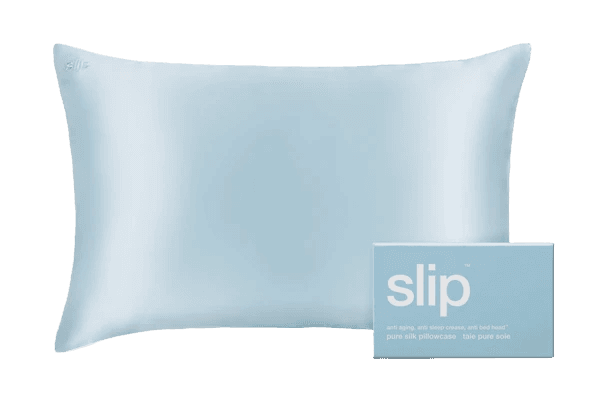
The biggest thing to get is silk pillow cases [to reduce friction on your hair while you sleep]. And before starting chemo, to help with future frizz, you can use smoothing products, like this nourishing shampoo, conditioner, and hair oil from Cezanne.


Caring For Your Hair During Chemo (and Cold Capping)
Gentle Combing
As the hair is coming out and shedding, it can lead to a lot of matting. You might not want to brush your hair, because it's emotional, you're watching it all come out. But then a lot of the loose hairs that are shedding could become mats and bring more tension—and then more hair will come out.
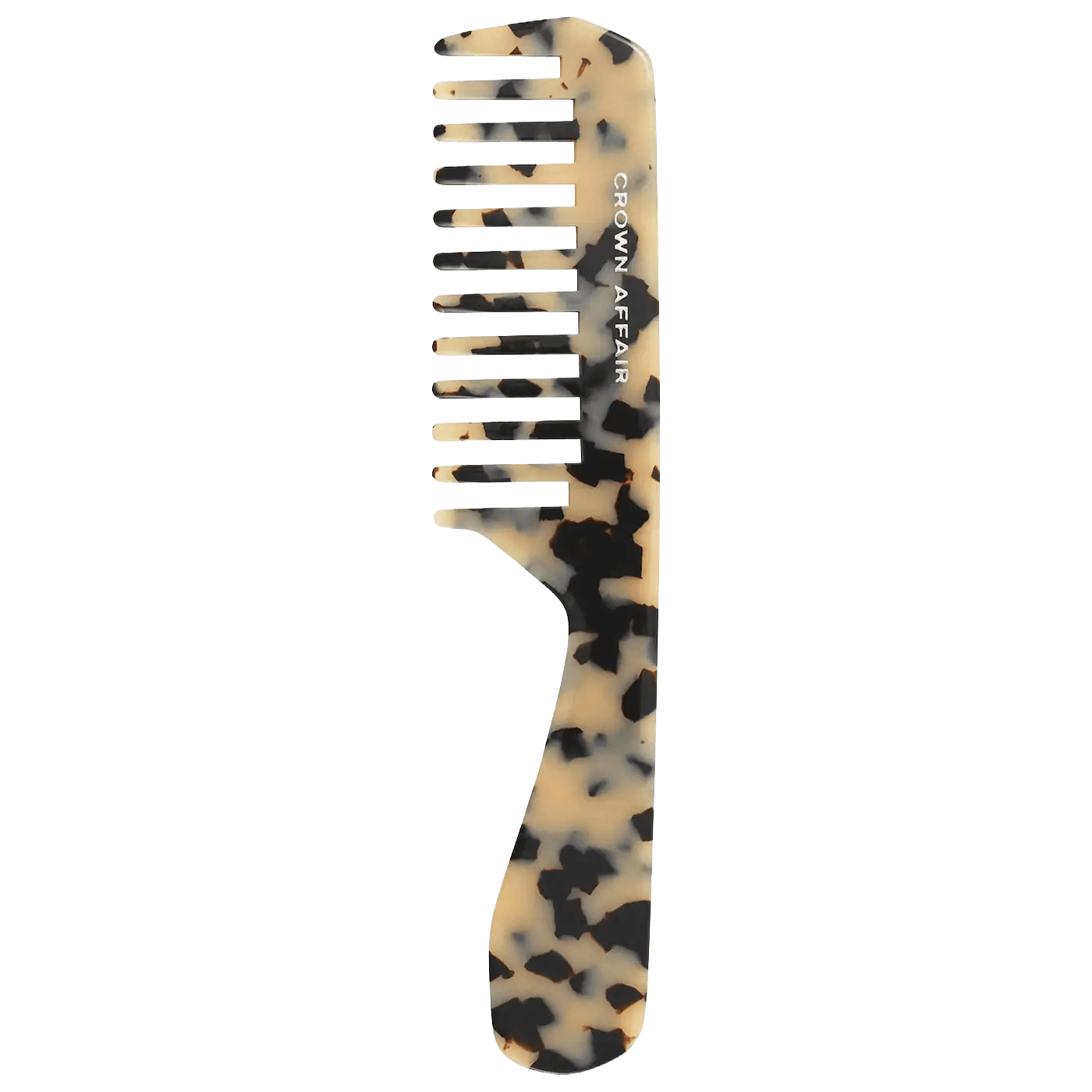
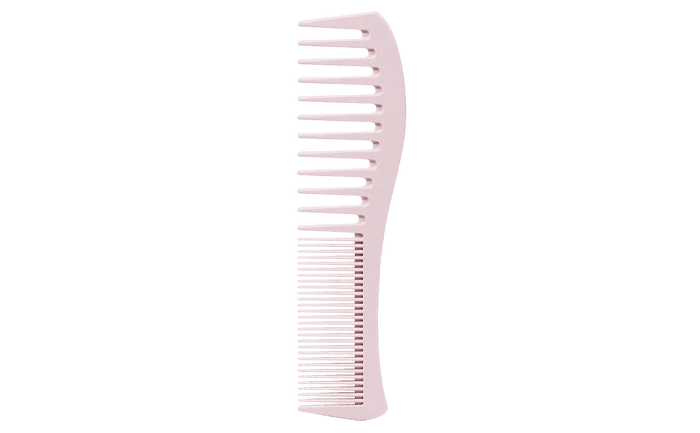
Comb your hair out at least once a day or every other day, because when you're not doing that, the shedding hair will get stuck, causing tension. Comb your hair with a wide, wide tooth comb with deep prongs that won't snag. The comb I used is one from Crown Affair with really wide teeth that doesn't snag. Another option is a wide tooth comb from Keranique. You don’t want a boar brush, you don’t even want certain flat brushes. These combs will help with the most gentle detangling, so the hair doesn't clump. Also, if your hair has more texture and more curl, there's going to be more shedding that's going to get stuck so brushing out with a wide tooth comb is going to be great.
Washing
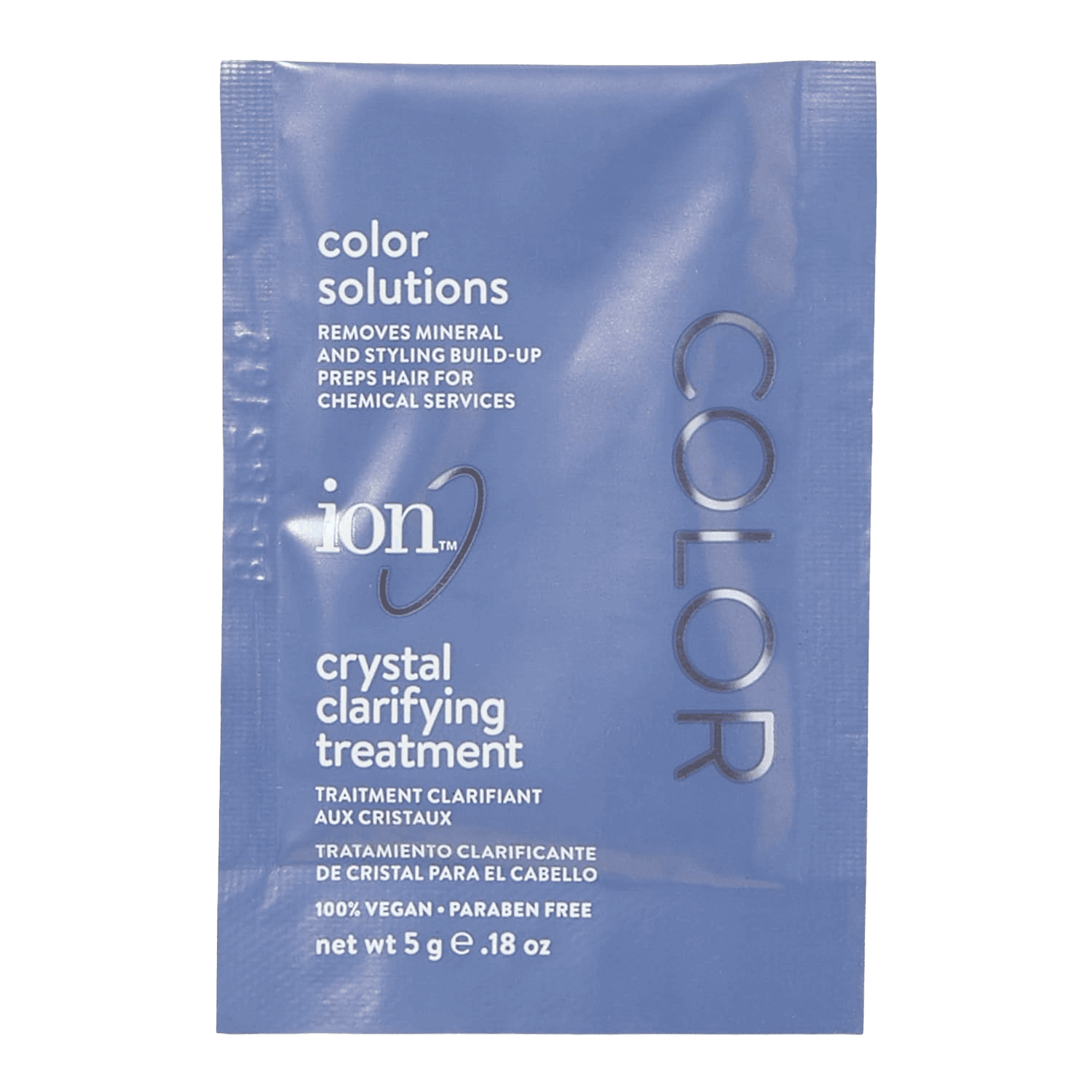
For washing, this is a two-person job. I would get a blow-up sink and lay down and wash your hair that way. If your hair is wet, then it's pulling itself down, so you want to minimize that. I'd add packet with ions that are clarifying to the water in the blow-up sink. You usually use it a lot when you’re highlighting your hair. You let the hair soak in the ion water for a bit, before rinsing it with clean water.

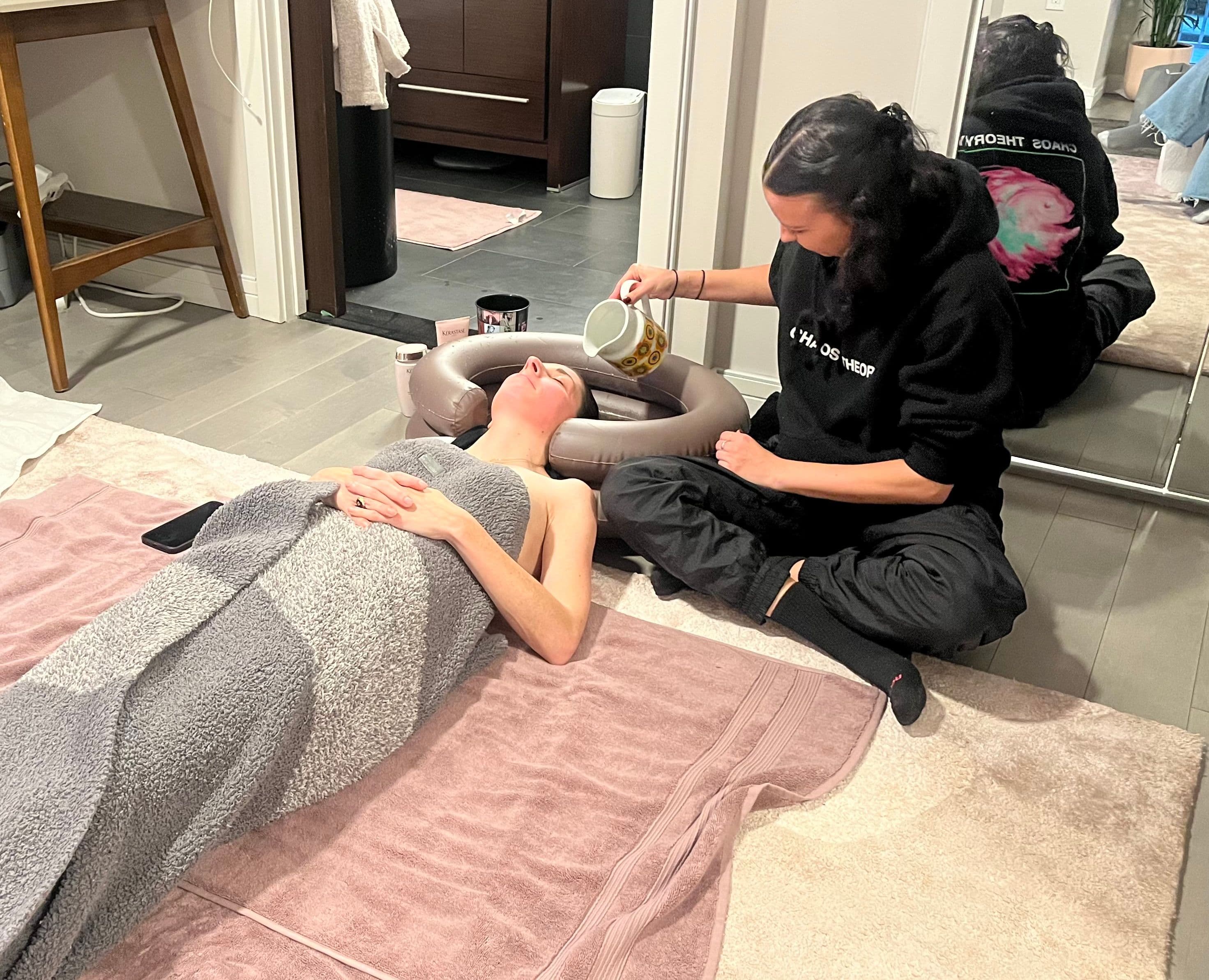
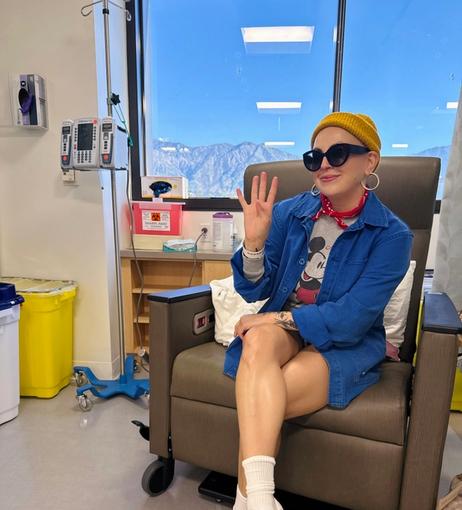
Netty washing Jen's hair after chemo treatment. Photo courtesy of Netty and Jen.
Shampoo
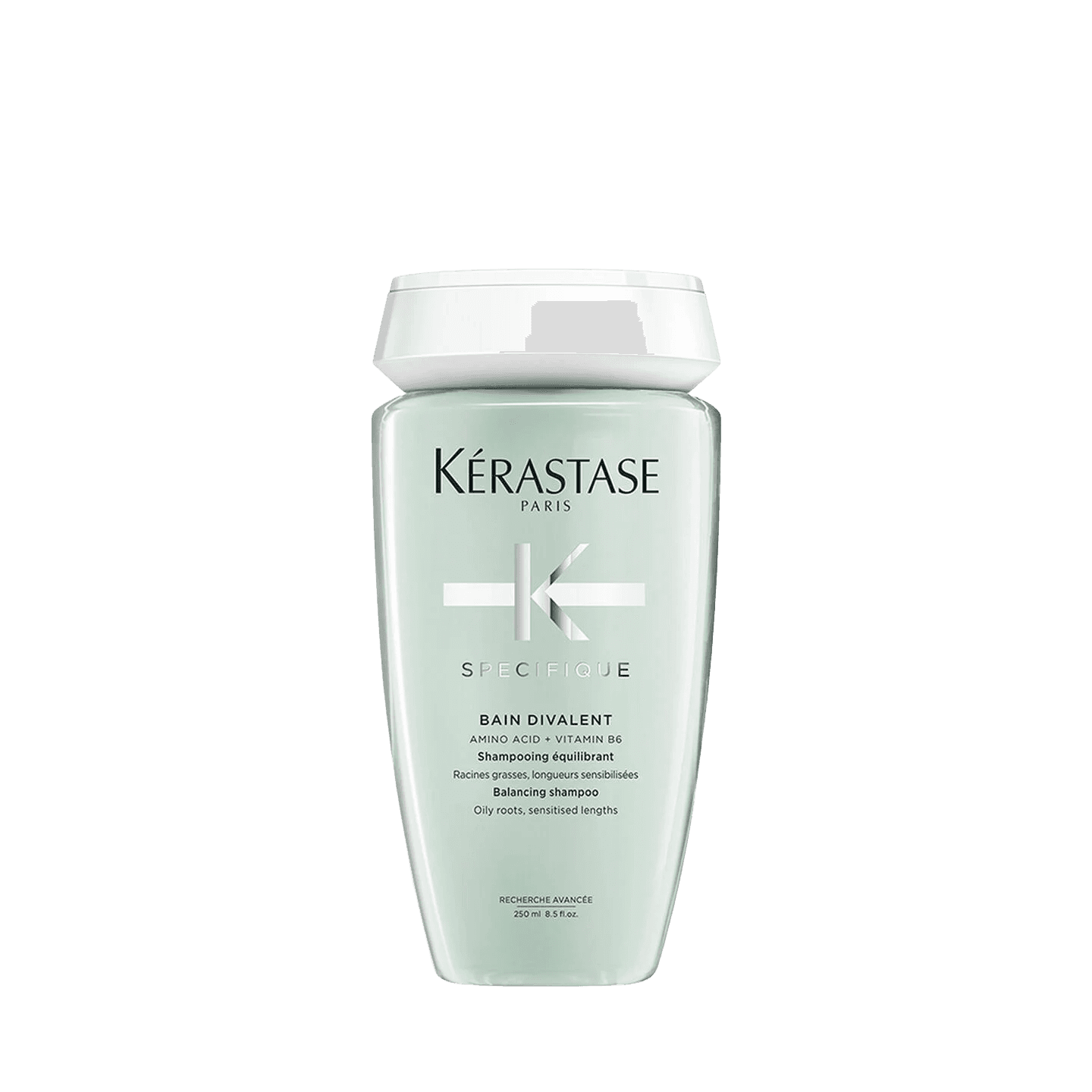
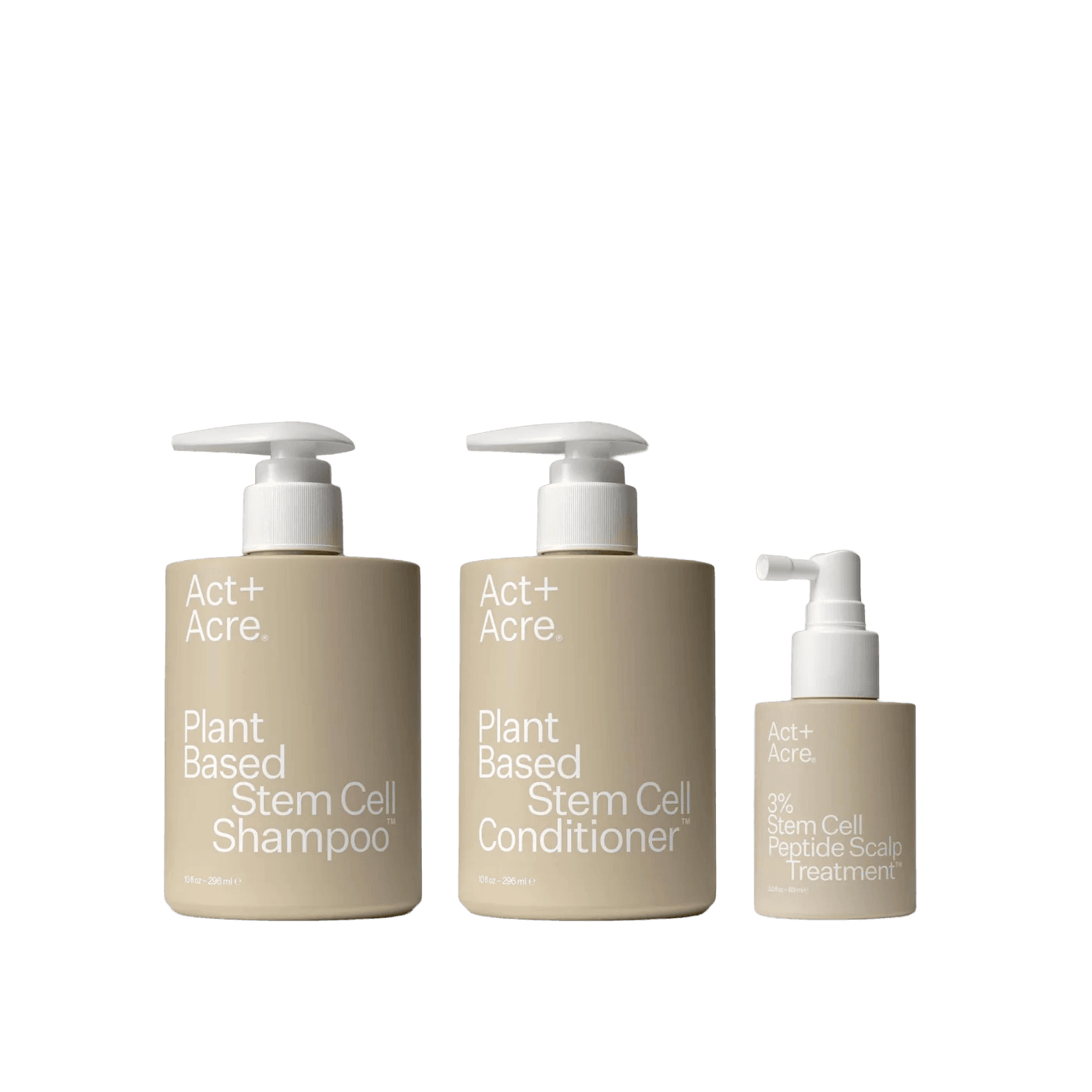
Then lightly wash your hair in the blow-up sink, focusing on the ends, without rubbing the scalp. You can use a cleansing and strengthening shampoo, I like these options from Kerastase, or this full set from Act+Acre, that could put a lot of proteins back into hair, just to keep it strong.

Rinse
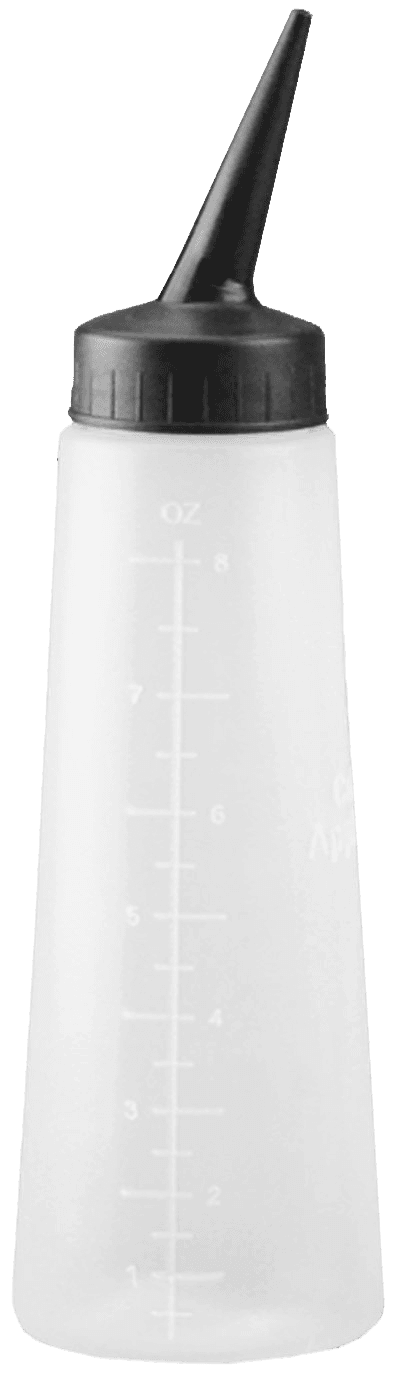
Wash the hair a couple times, rinsing with clean water. I would get a bucket of clean water, and fill up a squeeze bottle with it, and keep rinsing it out with a cup of new fresh clean water. You can feel and smell the chemo coming out. It’s a metal smell.
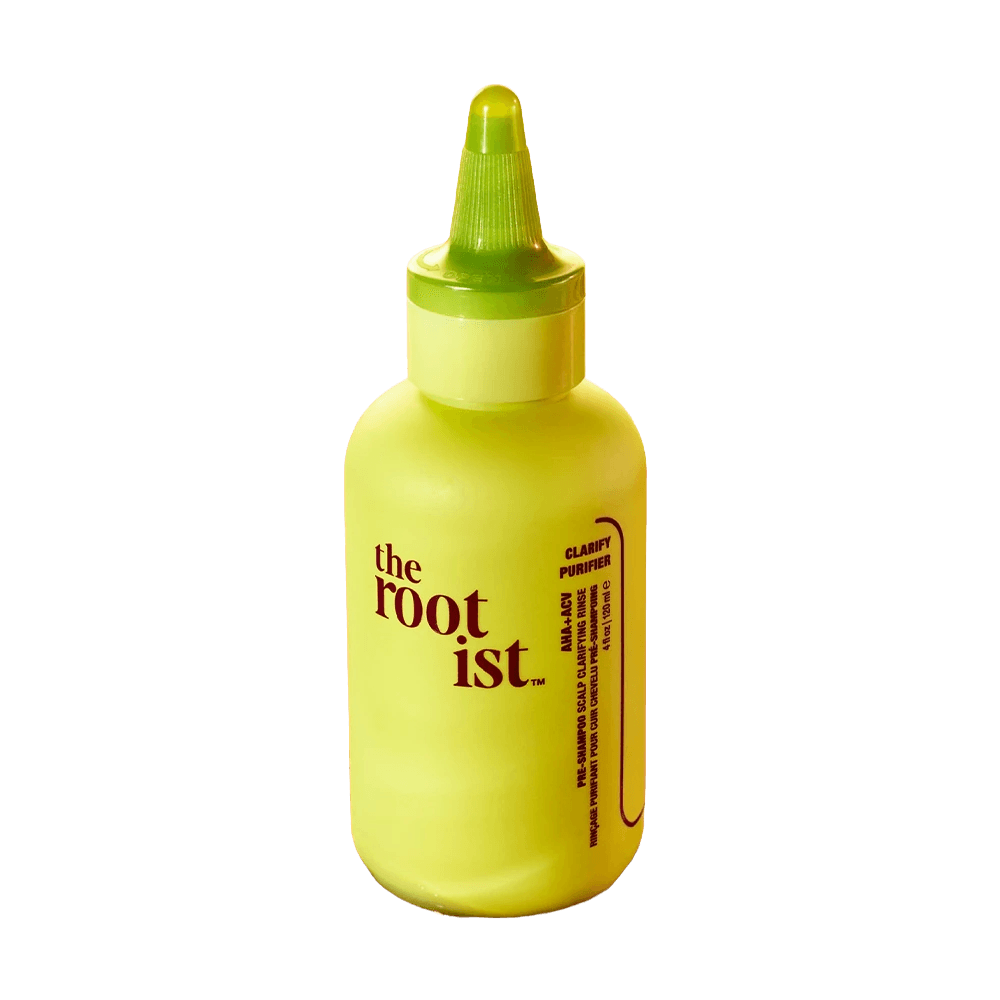
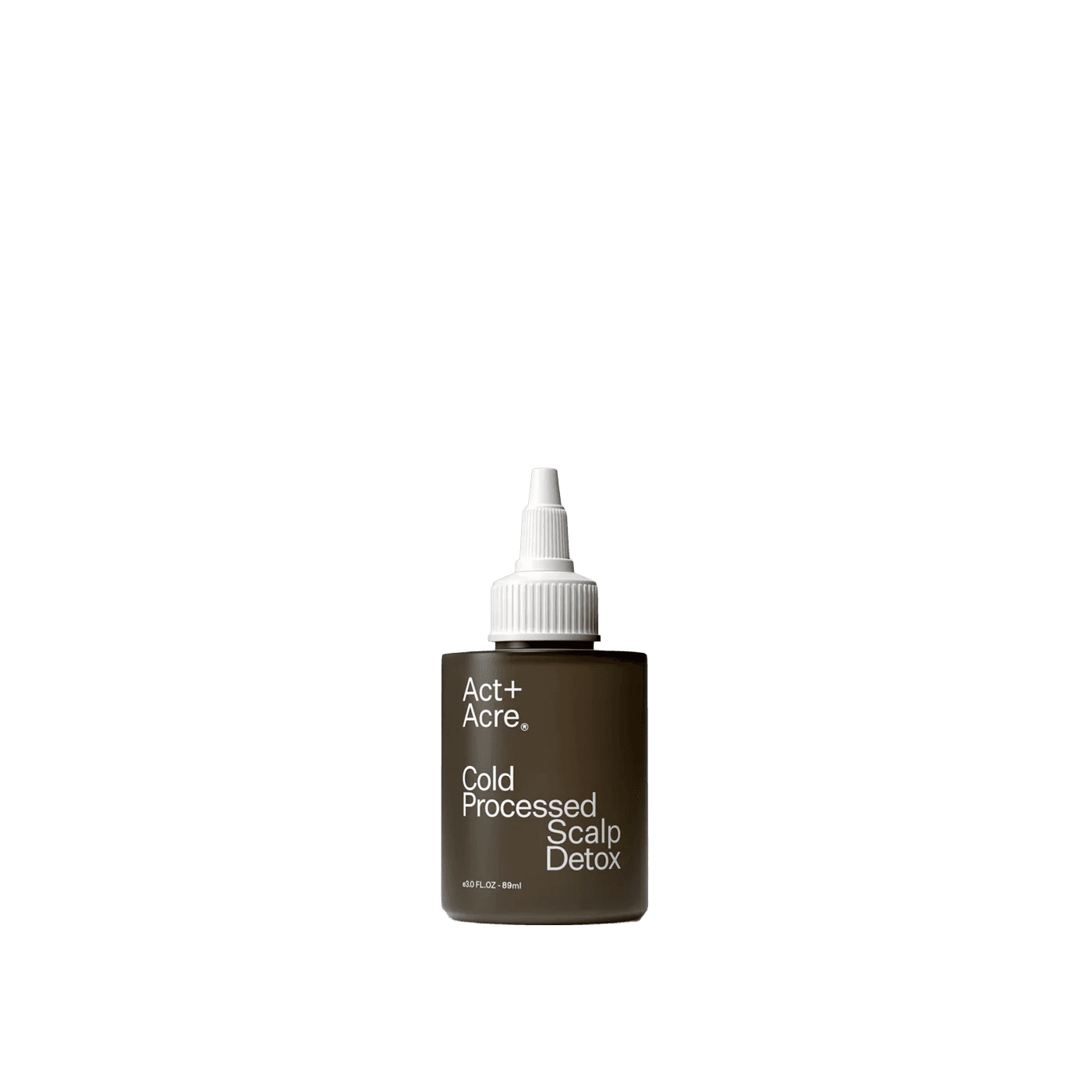
If your scalp starts to get irritated, there’s a lot of build-up, I would do an apple cider vinegar rinse and let that sit on the scalp to break things up. I also like the clarifying rinse from the Rootist or the scalp detox oil from Act+Acre.
Condition
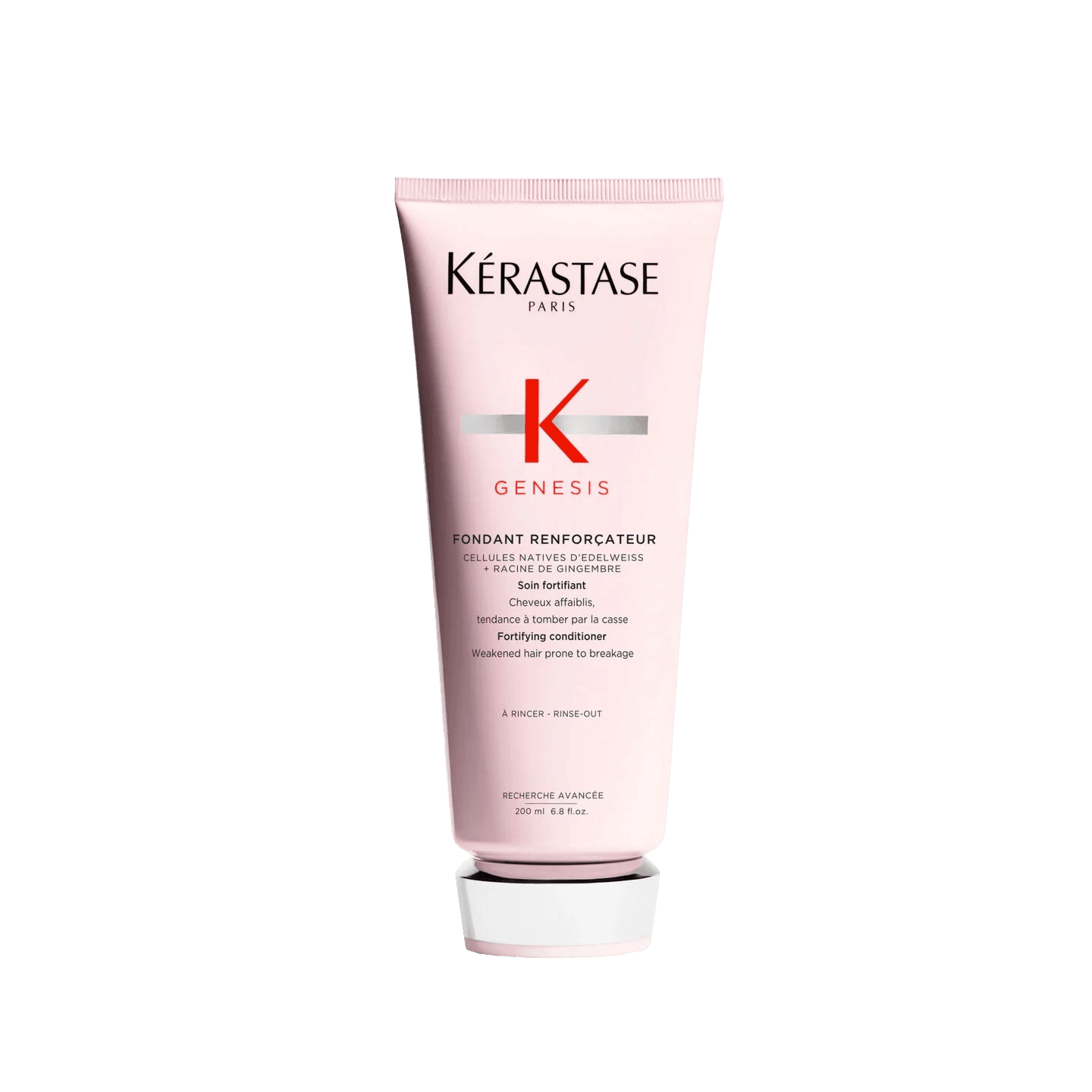
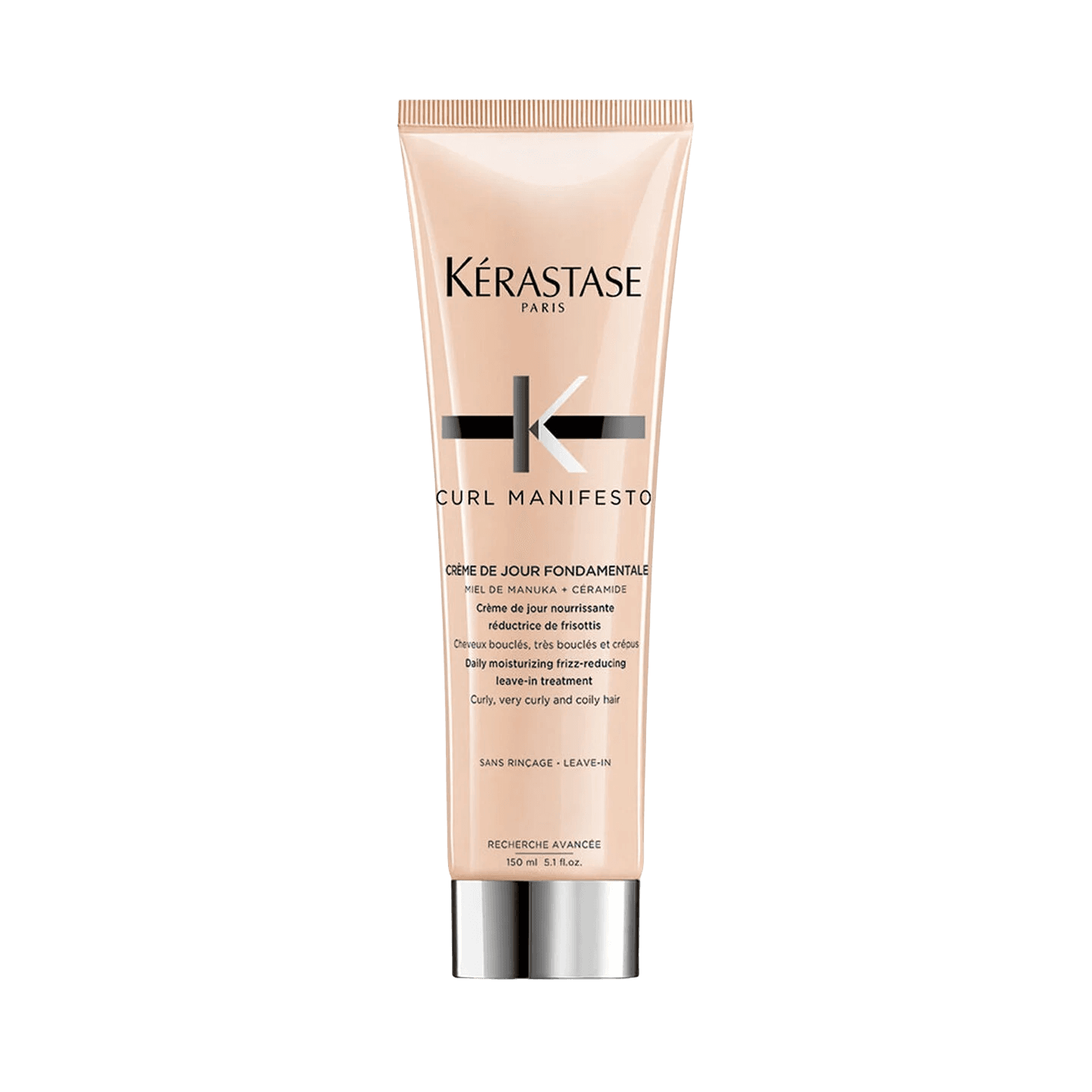
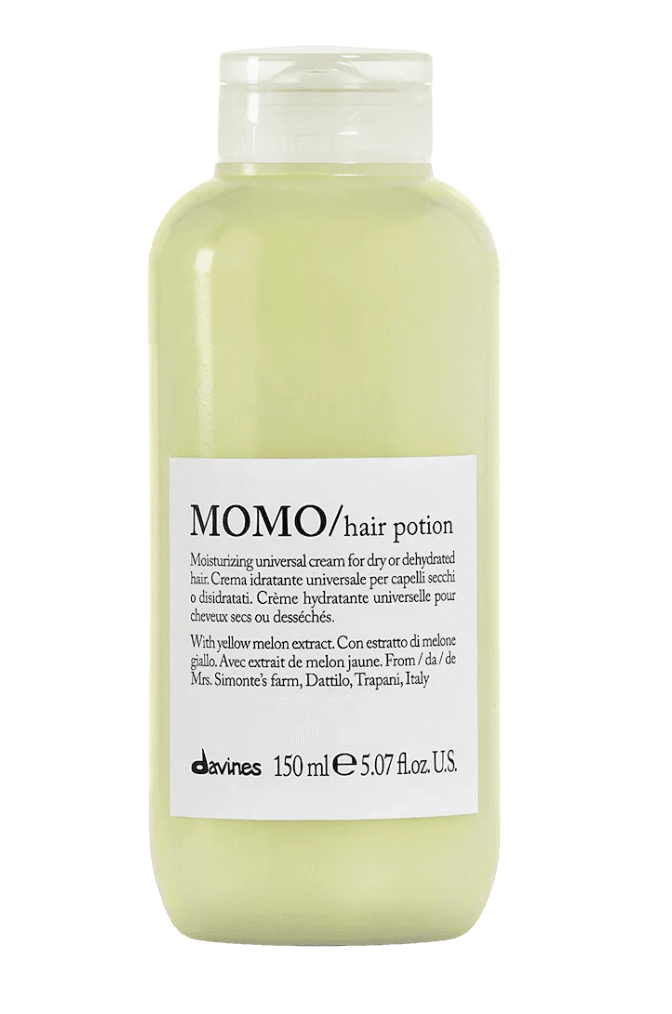
For conditioner, I like to use Kerastase conditioners, they just have really good technology. That will help with hair strengthening. If you have fine to medium hair, you can use Davine’s Momo moisturizing leave-in cream; for thick and curly hair, you can use Kerastase’s curl manifesto creme. For thicker hair or more textured hair, you want more moisture with your products.
Careful Drying
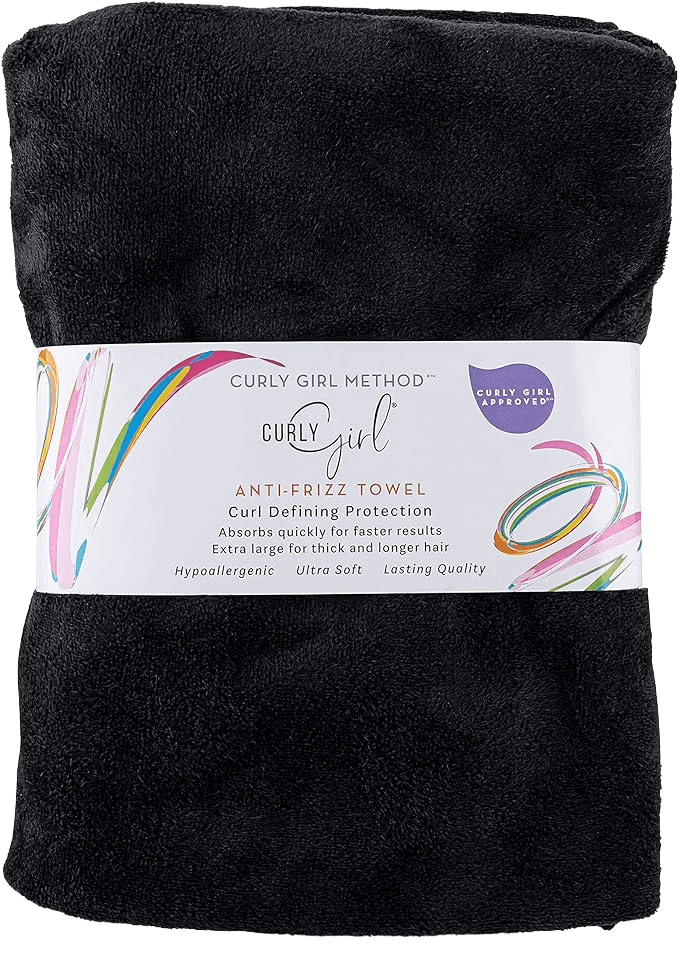
For drying, you can use a microfiber cloth instead of a cotton towel. It helps dry your hair without over-drying. You can twist it softly around the ends, and then just literally lift it, put it on your shoulder and walk to where you want to relax.
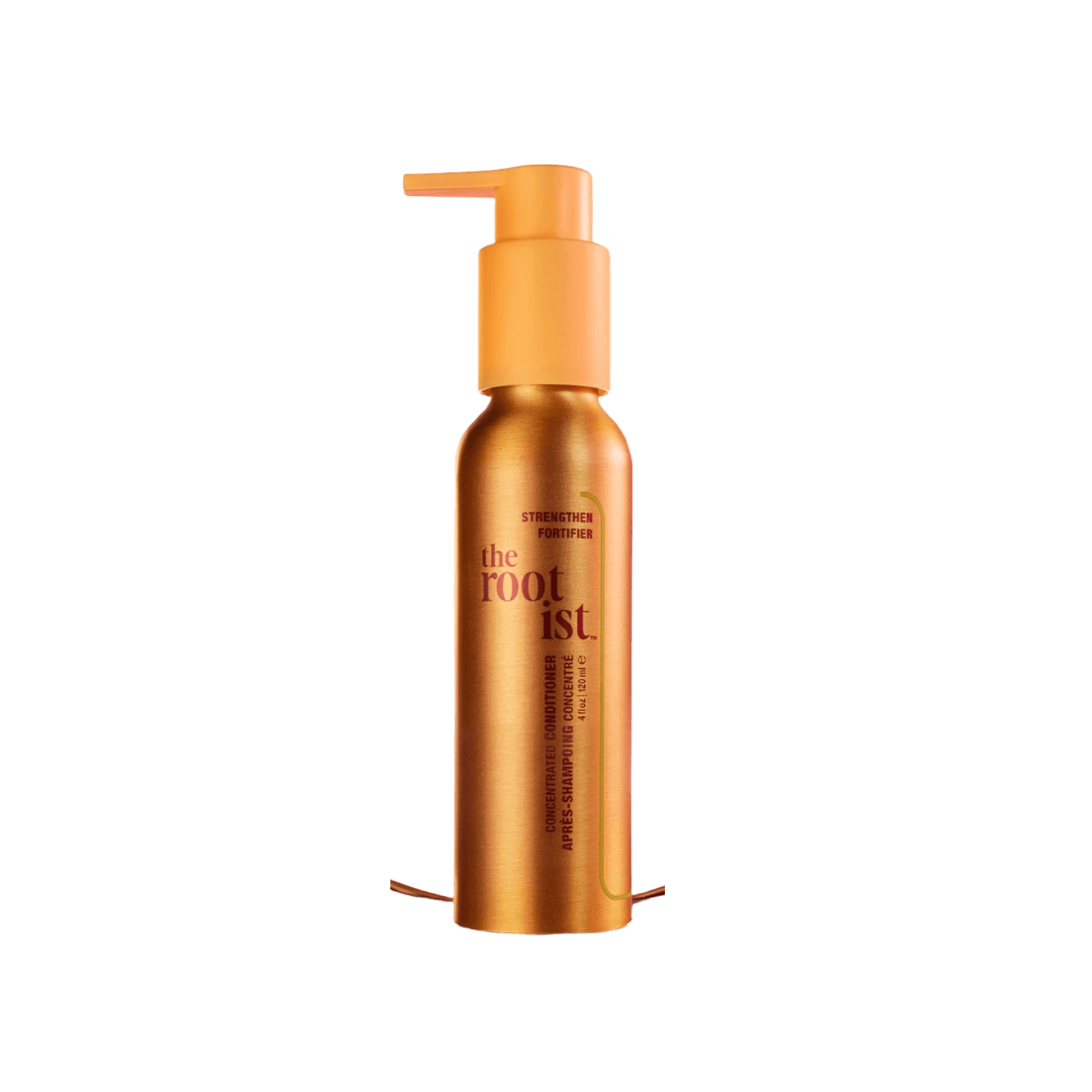
Then you can de-tangle your hair slowly with the comb. You slowly start from the bottom to the top and hold your hair up so there's no tension. Then you can hand-twist your hair. The Rootist has great detangling spray that’s sulfate-free. They have a really good line, it’s cold-pressed and vegan.
Finishing Touches
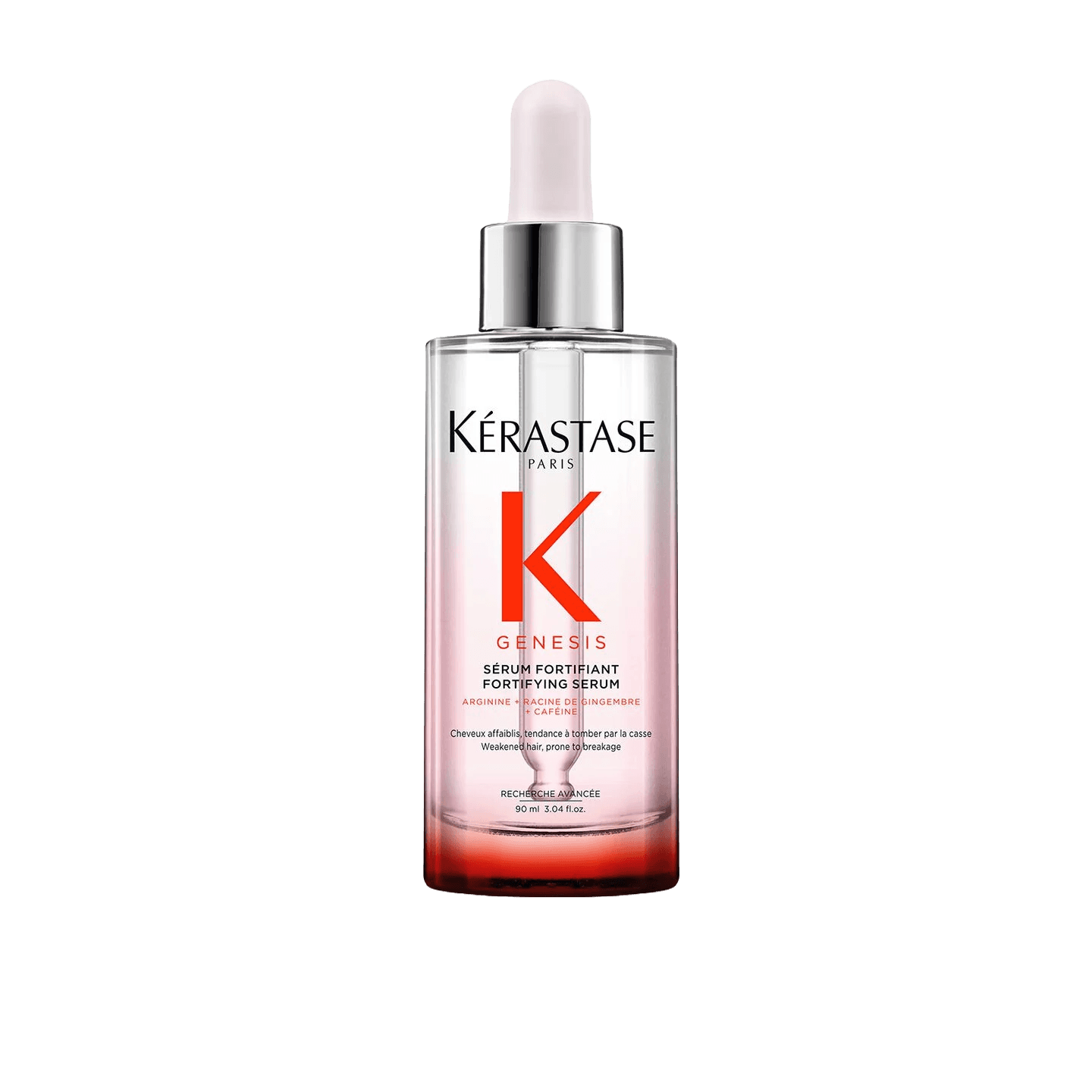
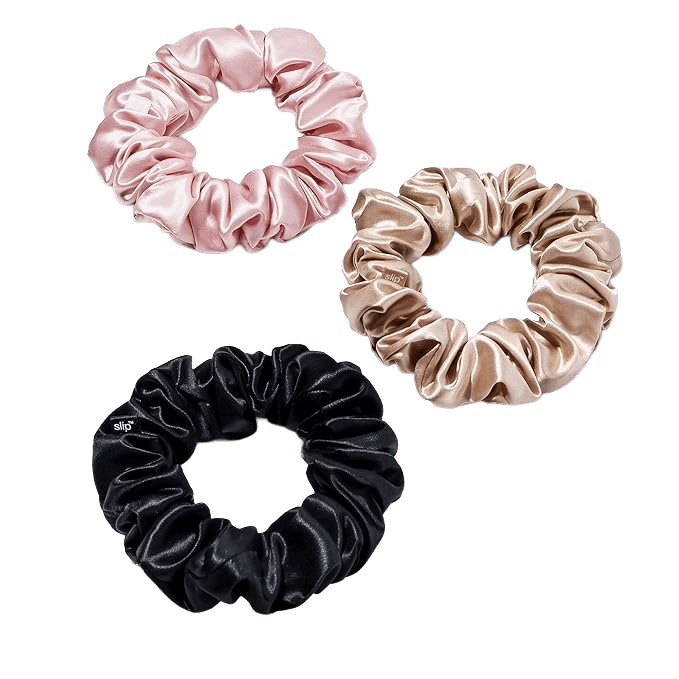
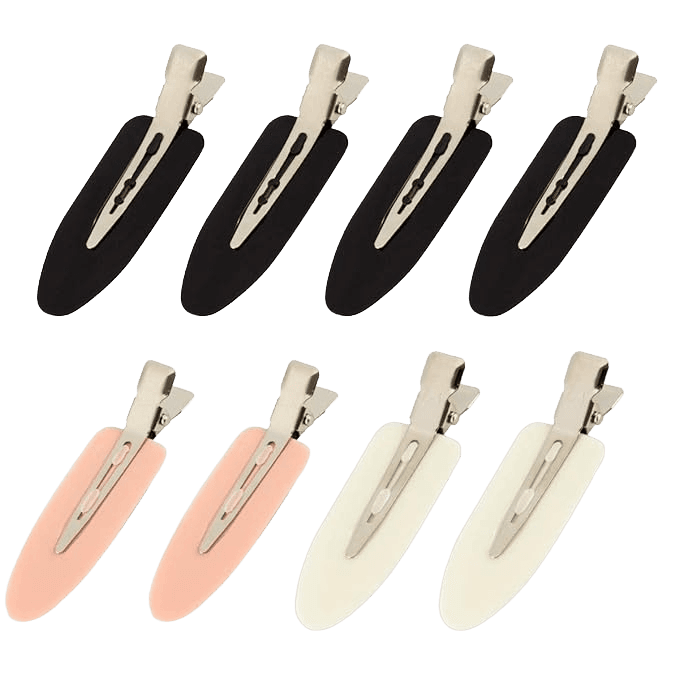
Then you can put in a serum, specially for weakened hair, I use the one from Kerastase. You can wrap your hair in a silk scrunchie with some flat clips, so that it isn’t pulling any tension. Or you can softly braid it— just so there’s really no tension. Then once your hair is dry you can take it out. No blow-drying. I wouldn’t use any kind of dry shampoo either. That’s going to clog your pores.
This is a two hour process every time you wash. You can teach a partner or a friend or a family member to do this. I would keep treating the hair this way, very gently, during and for three months after chemo.
Stimulating Hair Growth After Treatment
After chemo, you can use a micro-needling stamp all over the head and rub in the stem cell serum; Calecim has a set. This is a small dermis stamp, like five millimeters. You can stamp all over your head. It almost causes controlled trauma in a way, so then blood flows goes to the scalp and it helps reproduce cells. You can do it for like two or three weeks, and you could start seeing all this new hair growth. I’ve literally given this to some of my guy clients who are losing their hair from aging—and they were like, This is scary! But then they were like, This is actually fine. If boys can do it, you can do it.
[Editor’s note: this is something to check with your medical team about; there is some evidence that micro-needling can help with hair regrowth, but only for some types of hair loss.]
I’d suggest you take a hair pill, like Propecia. [As with all medications, check with your oncologist and medical team first.]
And I would suggest PRP [platelet-rich plasma] treatment. [Also something to check with your medical team about; as with micro-needling, this treatment has some evidence it can help regrow hair, but only in certain cases.] You get blood taken, they spin it, they take the gold platelets—they call it liquid gold—and they inject it into you. There’s a place in New York called Great Many and they literally only do it for scalps and hair. I've had clients who’ve gotten hair transplants and then they go get it done afterwards, and it helps continue with hair regrowth. I think it's a great thing for after chemo to help get your hair rebalanced. I would suggest that more than Rogaine or minoxidil.

Photographer: Tom Roughton. Photo courtesy of Netty Jordan.